Sunday, March 11, 2018

Unknown Worth: A Poetic Experience of Love and Truth (draft)

Shakespeare’s Sonnet 116 is a well-written, much-loved, and highly praised piece of classic literature, but to a young girl ignorant of literary intricacies, simply watching a Jane Austen movie with her dad, it was none of those things—it was magic. The words danced and swirled and moved in her heart like she’d never felt words do before. That child was me.

When I watched Ang Lee’s 1995 version of Sense and Sensibility as a little girl and heard Marianne quote Shakespeare’s beautiful words, I certainly wasn’t thinking about his use of syntax, rhyme, or sonnet structure. Shakespeare’s craft with words allowed me to experience the power of poetry without any knowledge of why it worked. However, I was moved to tears at the pure beauty of what he had created. His words entered the deepest parts of my heart. Even now, the words come to me almost unbidden: 

Let me not to the marriage of true minds 
Admit impediments. Love is not love 
Which alters when it alteration finds, 
Or bends with the remover to remove. 


These are the words I would find myself whispering alone in my room at night during my high school days, searching for something more, praying that love was real and that all men were not as ignorant or selfish as the boy who had just dropped me off. Poetry helped me form an idea of what true love was long before my time—causing me to skip the girlish giggles and swoons, and cling to my belief that love could be true when it was caring and considerate. Was I fanciful and childish? Carried off in a Cinderella dream? Maybe, but to me it felt deeper than that. This poem had set off in me the beginnings of wisdom; a yearning for what I wanted most in this life. It became a kind of rebellion against the lust, conflict, and brokenness that I saw all around me. I believed that love was possible, and I believed that it was powerful.

O no! it is an ever-fixed mark 
That looks on tempests and is never shaken; 


Shakespeare’s meticulous diction awakened me to the power of words. His use of the traditional sonnet structure somehow gave the poem a dependability and consistency that seemed symbolic itself. His beautiful lyricism swept me away to another world—a better world—a world where kindness ruled the day. These words gave me permission to feel; I began to believe that empathy was strength, and that emotion was not weakness. I have forgotten this many times, but always this poem always brings me right back. Even as a child, my heart could feel the truth of the words, and it gave me hope for the future. For my own future, and the future of the world.


It is the star to every wand'ring bark, 
Whose worth's unknown, although his height be taken. 

What a beautiful sentiment! “It is the star to every wand’ring bark,/ Whose worth’s unknown, although his height be taken.” I felt like my height had been taken, and I’d come up short. But maybe my worth was yet unknown—maybe I didn’t know my own worth, and maybe those around me didn’t either. Maybe finding my worth would be a journey; the symbolism of a guiding star hinting that maybe this journey would take some faith.

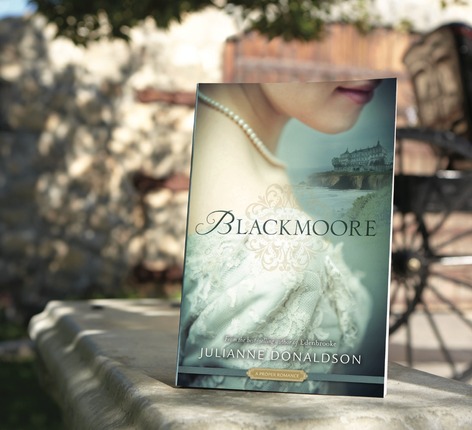
Imagine my delight when I stumbled upon the same poem in what would become a beloved book. The book is Blackmoore by Julianne Donaldson. In this story the protagonist hears her best friend reading this poem to his elderly grandfather who is losing his memory. With this impactful scene, the poem became even more meaningful to me:

Love's not Time's fool, though rosy lips and cheeks 
Within his bending sickle's compass come; 

Love cannot be tricked by time. The personification of both Love and Time makes these subjects real and tangible. Somehow, giving them names and personalities helps us understand their intricacies in new light. “Love’s not Time’s fool,” although “Within his bending sickle’s compass come,” and “Love alters not with brief hours and weeks.” Real Love is not diminished or controlled by Time, even as beauty fades, Love grows stronger.

Love alters not with his brief hours and weeks, 
But bears it out even to the edge of doom. 

Love is a journey, just as life is a journey. Words like “wand’ring,” “bears it out,” “hours and weeks,” and “edge of doom” tell a story. We can almost see the hero’s arc within the poem as Love itself voyages on.

Poetry such as this reveals our earnest emotions—as if the use of a dance-like rhythm deliberately shakes it out of us, all while alliteration like “alters not when it alteration finds” and “remover to remove” sticks it into our minds for good. In addition, poetry often says what we cannot say. What this poem said for me was undeniable—I felt that Love was true and somehow these words had proven it.

If this be error and upon me prov'd, 
I never writ, nor no man ever lov'd.


In these closing words Shakespeare wrenches you out of the spell he has previously cast. He calls us to reality by bringing in a first person narrative, which he hasn’t used since the very beginning of the poem. He references himself—and swears on the authenticity of his many works of literature and the love of all men everywhere that what he says is true. Could there be a more profound promise than that? These closing words connected poet and reader like nothing else could have. I felt like I knew him—as if we could commune across time and space to say the same words and feel the same sentiments. Ultimately, this is what I believe all poetry can do. It is a powerful medium that I believe can foster connection, understanding, and communication—in other words, it can foster Love—in unparalleled ways. Just as this one did for me, poems have the power to slice through the trifling and mundane things of everyday life, and connect our very hearts.

Wednesday, March 7, 2018

Don't Ignore the Signs: An Analytical Review of "The Silent Child"

The Silent Child is a phenomenal short film brought to light by the most recent Oscar Awards. The screenplay was written by Rachel Shenton, an actress and ambassador for the National Deaf Children's Society, as well as directed by Chris Overton. The messages addressed in the film are raw and heartfelt as the audience watches a young deaf girl named Libby leave her isolation of misunderstandings and embrace the communication and community a social worker offers in the form of sign language. I believe this film is so striking because the cinematography and script lend itself to the power of feeling understood. The film plays with lighting and framing to enhance that meaning, and the script shows us through the characters reactions.

For instance, there is a moment where Libby and the Joanne (the social worker) exuberantly talk in the light, outside. Libby has been learning sign language for some time, and her built relationship with Joanne, someone who understands Libby is like a breath of fresh air. Meanwhile, the next shot shows Libby's mother Sue, lurking behind the curtains, watching, drenched in darkness. At this moment, Sue feels alienated. She isn't understood by Libby, and sign language has broadened that barrier by providing a true confidante Libby can speak with. These emotions are heightened for the audience by the contrast of light and dark. Without the illumination of being understood, one is left in the dark.

The power of being understood is also embedded in the plot. The film ends with Libby ripped from the very tools that empower her. To withhold a happy ending from an audience is risky, but necessary to show how destitute one can be without a form of showing their capabilities. Beforehand the audience sees her in class, unaware of the spelling test taking place. It relied on hearing. The plot creates a poignant loss for the audience as one sees exactly how promising Libby's future can look with a means of communication, and the drastic shift once it is taken away. The cinematography captured the essence of that in the last shot. Joanne had rushed to Libby's school, in hopes to console her in some way. Libby signs, "I love you" Tears trickle down Joannes face as she signs it back. The camera zooms in on Libby, removing the audiences view of her hands. The camera cuts off the most integral form of her communication, just as the mother did to Libby. She could be signing underneath, but the audience will never know. Libby's thoughts could be boiling underneath, but her mother revoked the potential for her to express them as efficiently as possible.

The film could not have ended with a harder punch. The screen shows shocking statistics of how many deaf children are bereft of help with their condition. Then the screen reminds the audience deaf people can be anything they want to with a good support system. The team of "The Silent Child" is begging for that support system to be built. Some say it lacks art form to brazenly enlist the audience with those statistics, the work should speak for itself. In this case, it was a an empowering form of communication, with a message that deserves to be as clear as possible, giving voice to those who the world perceives as having none.

Tuesday, March 6, 2018

The Silent Child

The Silent Child was an awe-inspiring film that won the 2018 Oscars award for short films. It shows the life of a deaf girl born into a hearing family. The mother of the child hires a translator to help prepare the girl for school. The girl had been lost in the hearing world with little understanding of lip-reading or spoken English but she immediately latches onto Sign Language. Her interpreter introduces her to a world where she can communicate and be understood. The mother fears that she is losing her connection with her daughter because of ASL and decides to fire the interpreter and send the girl to school. This cuts off the girls communication with the world around her.

The film uses important cinematic elements in the film to give the viewers an insight into the deeper emotions of the characters. The film using symbolism in all of the major events. Towards the beginning of the film, it shows the girl sitting on the second floor while the mother walks out of the house on the first floor. The interpreter then walks into the house and up the stairs to meet the girl. By placing the girl on a different floor of the house separate from the mother, it shows the distance that is becoming apparent in their relationship. When the interpreter walks up the stairs to meet the girl, we learn that their relationship is expanding. This gives us an insight as to why the mother eventually fires the interpreter. She felt as if her relationship was being threatened by the addition of Sign Language to the daughter's life.

The second use of symbolism that I would like to point out from the film is right after the mother fires the interpreter. After the phone call, the mother and the daughter drive into a wall of mist that obscures the car from view. The mist shows the audience that the girl's life is now lost because she will no longer be able to communicate. It tells the audience that the mother's decision will become a barrier to the girl's progression. By becoming obscured by the mist, the girl loses hope.

The film itself was beautifully done. It perfectly captured the life of a deaf person in a hearing world and the challenges that the children have to take.

Empathy and Artistry in “The Silent Child”— A Review


“The Silent Child” is the 2018 Oscar-Winning short film about a deaf child living in a world of silence. Her family hires a young specialist to help their daughter get ready to attend English public school. The child (Libby) is found to be intelligent and capable, making great strides in her learning and communication with the help of her attentive tutor. However, along the way Libby’s inattentive mother becomes jealous of Libby’s relationship with her tutor and begins to feel she is being pulled away from her. She becomes blinded to the progress Libby is making and determines to cut the tutor out of her life entirely. In a heartbreaking end, she sends Libby to school with no help at all.
This engaging and inspiring film pleads with its audience to remember that “disability is diversity” and that there are many living among us who deserve our compassion and support. The film’s low-budget was visible at times, however I found that the director (Christ Overton)’s ingenious use of the tools he did have made his low-budget a strength rather than a weakness. The filmmakers used their limited resources to create a unique and impactful kind of artistry. They found unconventional ways to invoke the audience’s emotions which greater budget films often rely on their money to fuel.
One of the ways they invoked such a strong empathetic response in their audience was through their camera work. They were very intentional in their use of lines and angles in how they portray different characters and settings. After the opening scene, the camera comes in to show the family’s home at a diagonal. This unusual line creates immediate tension, communicating to the audience that all may not be what it seems in this family. Diagonal lines are used often throughout the film to create this same sense of unease. Another use of camera work is the choice to have Libby and her tutor often filmed from above looking down, and Libby’s mother from down looking up. This demonstrates the lack of support and tolerance, especially from Libby’s mother. Close up shots also play a major role in prompting sympathy from the audience, and also portraying lack of communication at times. One especially memorable close up shot is that of the tutor’s sleepless night. After hearing the truth about Libby (that she is her mother’s daughter of a different father), the tutor is completely unable to sleep—at this pivotal time the camera moves in close to her face and then switches to Libby’s face in a way that allows audience to almost tangibly feel their pain.

“The Silent Child” was a marvelous work of film—definitely deserving of the praise it has received. Its resourceful artistry was ingenious in prompting empathy from its audience and rallying allies to its cause.

Sunday, March 4, 2018

English+ and Native American Literature

I was able to attend two very interesting sessions of BYU's 2018 English Symposium. I started out with stories from the English+ programs on Thursday and then learned about Native American culture on Friday.
In the session called "My English+ Stories", the focus was mainly on the professional competencies gained from the humanities majors.  There were eight speakers who each showed how their experience in the Humanities has added to their communication abilities, cultural awareness, and work ethics. My personal favorite--and the most unique the experiences--was shared by Shae Russell. He owns a start-up company named "Velcs" and fighting to make this company more than just another place to buy shoes. He donates to local charities and spotlights disabled children whose lives could improve by owning a pair of velcro shoes. Shae Russell shared how the experience has helped him to understand business and aided him in his communication skills. In a reader-response view, the speech was very engaging. Through the use of visuals and argumentative language, I was convinced to support this small start-up company.

The second session I attended was called "Native American Literature". On essay, in particular, caught my attention. It was given by Carly Callister and focused on Native American women and how they responded to the attempts to force the Natives from their lands. I analyzed this essay from a feminist view. Carly pointed out how strong the women were multiple times in her essay. She made it a point to show how the women stood up valiantly for what they believed in--even if it meant going against what their white husbands were telling them to do. She portrayed these women as defenders of their land and people. It was very interesting to listen to the essay and to hear about the strength of the Native American women.

Overall, the essays that I heard at the symposium were very interesting. I thoroughly enjoyed all of the speeches and it was an eye-opening experience.

Behind the Scenes: Synthesizing BYU's English Symposium

BYU's English Symposium was packed to the brim with interesting sessions to attend. I had the opportunity to glean from Allie Condie's Q&A session/reading as well as British Literature and Social Change.

Allie Condie Q&A session, as well as the reading of her latest book, Summerlove (an Edgar Award finalist for Best Juvenile Mystery of 2016) was filled some tasty morsels of advice. One fun anecdote she shared was a quoted tweet from her unnamed friend. It went something along the lines of, "Writing book number five of a series is like playing a self created Pac-man". Essentially she was commenting on the universal plight of authors restricting their characters by the rules and previous experiences they have set in place. Thinking from the perspective of Biographical Criticism, I wondered if the nature of quandary authors write themselves into parallel their life experiences. Biographical Criticism is also relevant to the excerpt of Summer Love she read to us. Specific details were recounted from her life and yet the reader can't ignore the retrospective filter each memory goes through. I got the impression that the book is more romanticized because of those two factors, as opposed to someone trying objectively portray a pre-teen friendship.

The British Literature and Social Change plunged deep into the depths of Marxist and Feminist Criticism, as was to be expected, but I found another supplemental criticism that played a large role. Elizabeth D. Smith  looked at opposing satires from the late 18th century in her essay, "Challenging a Stereotype: Female Nature in Rape of the Lock and ‘Saturday. Small-Pox. Flavia'". As she investigated the inner workings of the separate writings, it became clear to me that in order to wring all the juice from a satire, one has to rely on the use of New Historicism. 'Saturday. Small Pox. Flavia.' written by Lady Montagu, is an aggrandizement of the insufferable consequences a lady in the late 18th century went through after receiving small pox. In her poem, she condemns society for restricting her power to such a wilting source as beauty, and bemoans her fate without it. If one stuck to a formalist critique, they would be ignoring crucial implications of the time. The specific jabs at how women were restricted in Montagu's era wouldn't be recognized, and the implications for change would be passed over. The impact of her work would be lost. An integral aspect of satire is the hyperbole, and without looking to the habitat it was created in, it can't be measured. 

Saturday, March 3, 2018

Looking to the Future: BYU's English Symposium


This week I had the opportunity to attend Brigham Young University's English Symposium. The keynote address was given by writer/editor Jennifer Adams, who has authored a popular line of children's books called BabyLit. She also recently released a book called "I am a Warrior Goddess" which she shared with us, and which I found very inspirational. As an English Major, I found this address inspirational and informative. It was helpful to hear about the arc of her career, including how long she worked as an editor before ever publishing her own books, and the reasons she has been given so much input as an author into the artistry of her kids books-- namely, because she has worked as an editor for the company who publishes her books. I've always found children's literature fascinating and it was wonderful to hear her insights into that particular branch of literature. She also took some time to give advice to future writers. The most helpful to me was her advice to practice, to take the time to be creative, and to learn to let go.

I also attended Ally Condie (author of the Matched Trilogy)'s weekly reading series, where she shared a book that was very personal to her called Summerlost. It was a story she'd written where she drew much of the storyline and characters from her own past, and it was absolutely enthralling. I have read the Matched Trilogy and didn't find it very original or interesting. Summerlost, however, was a completely different breed. I felt that her writing was much more engaging and thought-provoking in this book than others I've read. I also enjoyed the question and answer session she had at the end of the reading series. She also talked about her career as an author, and where she finds time to write as a mother of four. I found her advice to be flexible with your schedule helpful. I was grateful to be able to attend this Symposium. I felt that I was able to be introduced to different career paths that I hadn't before considered, and to new types of literature and presentation styles that I hadn't experienced before. I look forward to attending this event again next year!

Wisdom: The More You Know, The Less You Don't Know

Analyzing and exploring literature can appear daunting. In the past, I would sometimes feel inadequate making contradictory assertions about...